
Workshop: How to analyse qualitative evaluation data (Online 6 May & 13 May 2027)
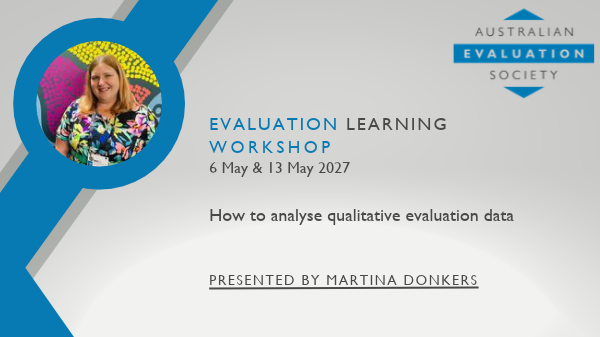
Workshop: How to analyse qualitative evaluation data
Date and time: Thursday 6 May and Thursday 13 May 2027, 10.00am to 1.00pm AEDT (registration from 9.45am) Registrants are to attend both sessions. (full day workshop - 2 sessions)
Venue: Via Zoom. Details will be emailed to registrants just prior to the workshop start time
Facilitator: Martina Donkers
Register online by: 5 May 2027. Spaces limited to 25 participants
Fees (GST inclusive): Members $400.00, AES Organisational member staff $525.00, Non-members $609.00, Student member $200.00, Student non-member $300.00* *Students must send proof of their full-time student status to
Purpose of Workshop
You’ve done your focus groups. Your interviews went brilliantly. The site visits were a great success. You’ve got stacks and stacks of data.
Now what?
The meaning-making stage between raw qualitative data and evaluation findings can feel opaque. You know you need to do analysis – but what does that involve, exactly? What does it mean to do thematic analysis? How does coding work – and do you need to spend thousands on coding software? Could you just count how many times people said something? But what about that idea – it was only raised once, but it seems really important? Do you need to think about cultural safety? Maybe A.I. will just do the job?
This practical workshop will open the black box of how to do qualitative analysis for evaluation. We’ll explore your choices in analysis methods, connecting different options to your evaluation purpose and the data collection methods you’ve used. We’ll go through options for how to analyse different kinds of data (such as open-response survey data, focus groups, document sets, etc.), and how to make analysis easier through better evaluation design. We’ll get stuck into how to actually code – what coding means, the different kinds of coding, and what you can (and can’t!) do with coded data. And we’ll look at methods to bring it all together with different synthesis tools, including ones that work for mixed methods and data triangulation.
Workshop Content
This workshop combines group discussion, practical exercises and traditional presentation to deliver an engaging workshop aligned to adult learning principles. Participants will leave with the confidence to tackle their qualitative data head-on, so they can deliver robust, reliable evaluation findings that can make a difference.
Specific topics covered:
- Selecting qualitative analysis methods
- Paradigms, worldviews, and how this affects choice and credibility in qualitative analysis
- Designing data collection for analysis
- Preparing different kinds of data for analysis
- Coding – first- and second-cycle methods, deductive and inductive approaches, manual coding, coding software, rigour in coding
- Risks, benefits and options for quantifying qualitative data
- Meaning-making, findings and interpretation
- Synthesis methods that support qualitative analysis (including rubrics, synthesis matrices, workshop approaches)
- Mixed-methods and triangulation with qualitative data sets
- Credible reporting and supporting findings with evidence
Workshop Outcomes
At the conclusion of the course, participants will be able to:
- Identify core qualitative analysis methods
- Link design and method choices to credibility, worldview and evaluation purpose
- Consider evaluative reasoning when choosing analysis methods
- Identify core aspects of preparing data for analysis
- Recognise options for the unit of analysis in qualitative data analysis
- Differentiate key coding options
- Identify risks and benefits in quantifying qualitative data
- Recognise core synthesis tools
- Consider reporting options for qualitative data
PL competencies
This workshop aligns with competencies in the AES Evaluator’s Professional Learning Competency Framework. The identified domains are:
-
Domain 1 – Evaluative attitude and professional practice
-
Domain 2 – Evaluation theory
-
Domain 3 – Culture, stakeholders and context
-
Domain 4 – Research methods and systematic inquiry
Who should attend?
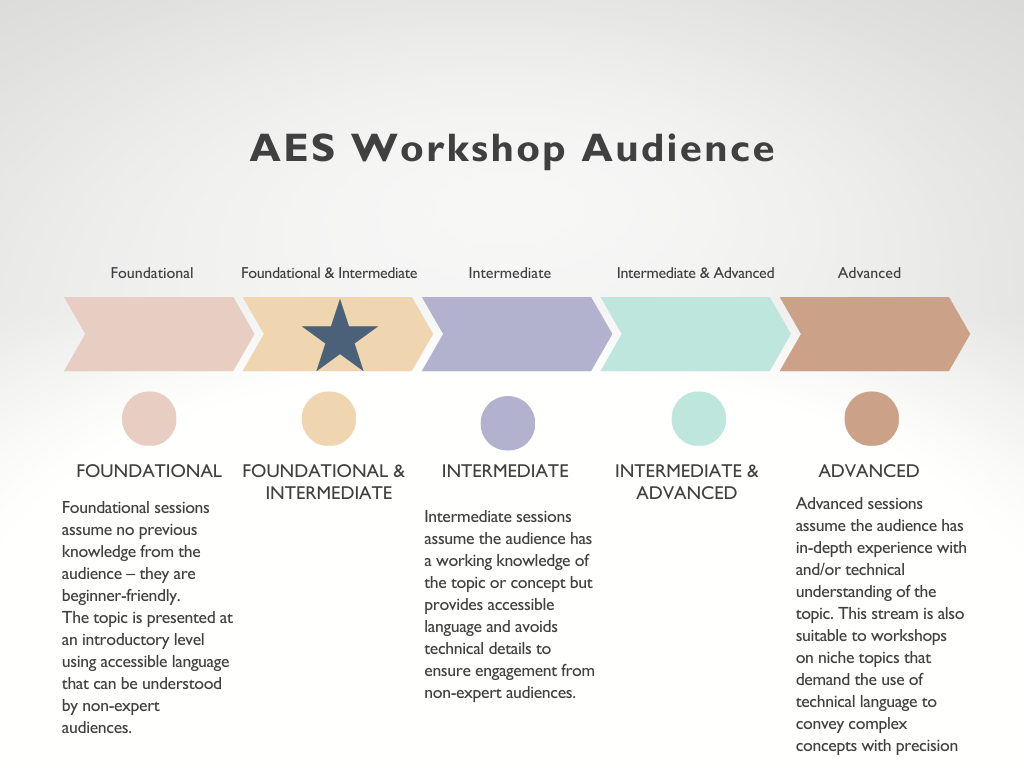
This workshop is suited to foundational and intermediate evaluators, researchers and professionals who collect or work with qualitative data and want to build their confidence and practical skills in analysing, interpreting and presenting credible evaluation findings.
Workshop start times
-
VIC, NSW, ACT, TAS, QLD: 10.00am
-
SA, NT: 9.30am
-
WA: 8.00am
-
New Zealand: 12.00pm
For other time zones please go to https://www.timeanddate.com/worldclock/converter.html
About the facilitator
Martina Donkers is an independent evaluator and consultant working with non-profits and governments to understand and increase their impact. She holds a Master of Evaluation (hons) and a B.A./B.Sci. (science communication), and uses a variety of qualitative methods to evaluate very large complex projects, and small straightforward projects. She's a strong believer in helping people to get the info they need to make the right decisions for their work, and understanding the role of context and purpose in driving those decisions. Martina is known for her ability to explain ideas in ways that make sense – she loves a good analogy, and creates an approachable, relaxed adult learning environment. Martina won the AES Emerging New Talent Award in 2024. You can connect with Martina at www.martinadonkers.com, or on LinkedIn.
Event Information
| Event Date | 06 May 2027 10:00am |
| Event End Date | 13 May 2027 1:00pm |
| Cut Off Date | 05 May 2027 4:00pm |
| Location | Zoom |
| Categories | May Workshops |
We acknowledge the Australian Aboriginal and Torres Strait Islander peoples of this nation. We acknowledge the Traditional Custodians of the lands in which we conduct our business. We pay our respects to ancestors and Elders, past and present. We are committed to honouring Australian Aboriginal and Torres Strait Islander peoples’ unique cultural and spiritual relationships to the land, waters and seas and their rich contribution to society.