Meet Your Mentors – Group Information
Career Pathways in Evaluation
About This Group
This mentoring group supports emerging and mid-career evaluators to explore career direction, build confidence, and make informed decisions about their next steps.
Led by two experienced mentors from different career stages and backgrounds, the group offers a balanced view of evaluation pathways across sectors and roles.
Group Focus
This group explores the diverse and often non-linear pathways within evaluation, with practical insight into:
• Career options across academia, consulting, government and NGOs
• The realities of working in evaluation, including the business of consulting
• How to build your professional profile and ‘evaluation brand’
• Practical strategies for networking and positioning yourself
• Insights from both senior and mid-career perspectives
What You Can Expect to Gain
Through participation in this group, you can expect to:
• Gain clarity on potential career pathways
• Understand the skills and experiences required across roles and sectors
• Build confidence in navigating career decisions and transitions
• Learn practical strategies for career development (networking, positioning, skill-building)
• Be exposed to real-world career journeys and perspectives
• Develop a clearer short- to medium-term career plan
• Strengthen your professional network and peer connections
How This Mentoring Group Works
This group uses a flexible and adaptive approach that evolves with the needs of participants.
The early phase includes more structured sessions with guided topics such as:
• Career pathways and sector insights
• Building your profile and network
• Entering the field and navigating opportunities
• Freelance vs organisational roles
As the group progresses, sessions become increasingly mentee-led, shaped by your interests, questions and goals.
There is a gradual shift in ownership, with mentees encouraged to:
• Bring real challenges and decisions into discussions
• Contribute to and lead conversations
• Learn from both mentors and peers
This creates a balance of practical guidance, reflection and shared learning.
Angeline Ferdinand
Evaluator | Academic | Health & Complex Systems 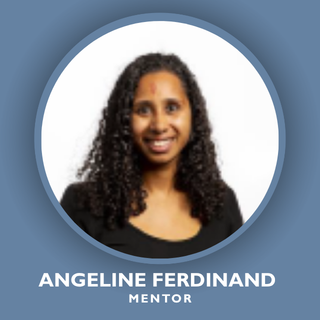
• 20+ years’ experience evaluating health programs, policies and services
• Focus on health equity and complex program evaluation
• Experience across national, regional and international contexts
Angeline brings a strong academic and systems-thinking perspective, particularly in complex and policy-driven environments.
Brad Astbury
Evaluator | Consultant | Educator
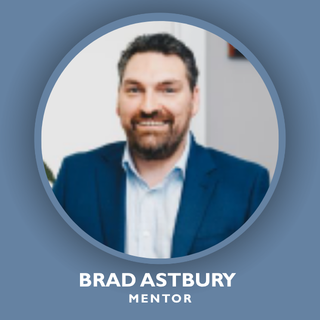
• 150+ evaluations over 25 years across industry, university, NGO and government
• Experience across diverse areas including mental health, justice, education, clinical health, community services, transport and climate change
• Extensive experience in teaching and mentoring evaluators, including over 10 years in a Masters of Evaluation program
Brad offers a highly practical, applied perspective with deep cross-sector experience.
Mentor Partnership & Style
This group is shaped by a collaborative partnership that combines:
• Strategic, long-term insight with practical, recent experience
• Exposure to multiple career pathways and transitions
• A space for open discussion about career development, challenges and opportunities
Both mentors share a strong commitment to:
• Supporting the development of emerging and mid-career evaluators
• Strengthening the evaluation profession and community
• Creating a respectful, engaging and collaborative learning environment
Who This Group Is Best Suited For
This group is ideal if you are:
• Exploring your next career step in evaluation
• Considering moving between sectors or roles
• Looking to build clarity, confidence and direction
• Interested in practical insights and honest conversations
• Willing to actively participate in a discussion-based group environment
Evaluation on the Fringes
About This Group
This group is designed for practitioners working at, or moving across, the boundaries of evaluation and other forms of inquiry. It focuses on the transferability of skills, knowledge and thinking between evaluation and adjacent professional disciplines directed towards undertaking systematic inquiry and providing evidence for decision-making such as audit, research, performance measurement and organisational review.
Participants will explore how evaluative thinking can apply beyond traditional evaluation roles, building awareness of how different forms of inquiry intersect, complement and diverge.
Group Focus
The group will centre on strengthening participants’ ability to apply evaluative thinking across diverse contexts. Through shared discussion and individual reflection, mentees will explore how evaluation principles, ethics, frameworks and approaches can be adapted and applied in evaluation-adjacent or hybrid roles.
There will also be a focus on developing awareness of when evaluation approaches and techniques are the right approach and when they are not in other professional settings.
What You Can Expect to Gain
Through participation in this group, mentees can expect to:
• Broaden their perspective on the similarities and differences between evaluation and adjacent professions such as audit, research, and performance measurement
• Build confidence in applying evaluative thinking to workplace challenges, including making evidence-based and defensible judgements
• Expand their evaluation toolkit, including exposure to frameworks, methods, ethics, and emerging approaches (such as AI), and understanding how these translate across contexts
• Strengthen their evaluation-centered professional identity, particularly for those not in formal evaluation roles, by developing an ‘evaluative mindset’ within their organisation
• Explore career pathways that sit at the intersection of evaluation and other disciplines
Mentees will be encouraged to bring their own work challenges and career questions into the group, creating a practical and relevant learning environment.
How This Mentoring Group Works
This group will be discussion-based and highly interactive, with a strong emphasis on peer learning and real-world application.
Sessions will be co-facilitated, with mentors alternating the lead depending on the topic. Each session will include guided discussion prompts, shared insights, and practical takeaways, while also allowing flexibility to respond to the needs and interests of the group.
Participants are expected to actively contribute, share experiences, and engage in open dialogue to maximise the value of the group learning experience. Mentees will be invited to discuss their own work situations and career options
Graham Smith
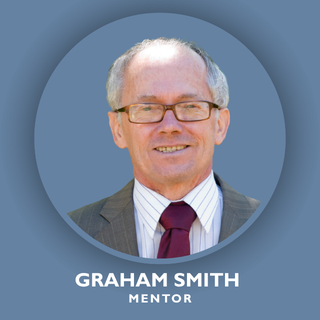
Graham brings extensive experience across multiple forms of systematic inquiry, including evaluation, performance audit, risk management and performance measurement. His career spans senior roles in Commonwealth and ACT Government agencies, consulting, and academia.
He has worked as an operations research analyst, performance audit manager, and evaluator across departments including Defence, the Australian National Audit Office, and Environment. He has also run his own consultancy, delivering evaluations, performance audits, and quality assurance work.
Graham holds a PhD focused on performance measurement and teaches and researches at the University of Canberra. He has contributed significantly to the Australasian Evaluation Society (AES), including leadership roles and conference program delivery and continues to deliver workshops on performance measurement.
Emma Wensing
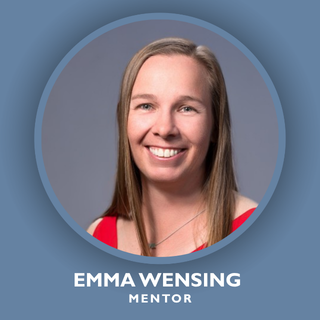
Emma is a social research and evaluation specialist with over 15 years of experience across government, private and not-for-profit sectors. She has led and contributed to more than 30 research and evaluation projects, providing evidence-informed advice to decision-makers.
She holds a Doctorate in interdisciplinary cross-cultural studies and a Master of Evaluation, complemented by qualifications in management and training. Emma has a strong focus on applying evaluation approaches to real-world contexts, particularly in areas such as culture change, diversity and inclusion, workforce strategies, and organisational behaviour.
Emma is passionate about building evaluation capability in others and has extensive experience mentoring and developing emerging practitioners. She currently serves as co-convenor of the AES ACT Regional Committee.
Mentor Partnership & Style
Graham and Emma bring complementary experience across evaluation and adjacent disciplines. While their career paths have not been solely evaluation-related, they have both found professional development, identity, and connection in the evaluation field. Together they offer a well-rounded perspective for mentees working “on the fringes” of evaluation.
Their approach is collaborative, flexible and responsive, combining structured session guidance with space for mentee-led discussion. While both mentors will attend all sessions, they will alternate facilitation based on topic areas.
Their mentoring style emphasises:
• Practical application of knowledge across contexts
• Open discussion and shared learning
• Supporting mentees to build confidence and professional identity
• Encouraging connection to the broader evaluation community
They are particularly passionate about supporting those navigating non-linear or interdisciplinary career paths.
Who This Group Is Best Suited For
This group is ideal for individuals who:
• Work in roles adjacent to evaluation (e.g. audit, research, policy, performance measurement, or organisational review) or are moving from adjacent disciplines into evaluation roles
• Are not in a formal evaluation role but want to strengthen their evaluative thinking and skills
• Are interested in bridging disciplines and applying evaluation approaches in broader contexts
• Want to explore how evaluation can support their career development and professional identity
It is particularly suited to those curious about how evaluation fits within a wider ecosystem of inquiry and decision-making.
From Conversations to Capacity – Catalysing ECB through facilitation and engagement
About This Group
This mentoring group focuses on evaluation capacity building (ECB), with facilitation and stakeholder engagement as the core enablers of meaningful, sustained impact.
Our approach is grounded in the belief that effective ECB is not just technical. It is deeply relational. We will support mentees to:
• Recognise and work with the human experience of evaluation as a starting point
• Facilitate design conversations that surface diverse perspectives and sharpen evaluative focus
• Design and lead stakeholder engagement across the full evaluation lifecycle from design to use
• Guide structured sensemaking processes that promote reflection, learning and utilisation
• Navigate power, culture and ethics in facilitation, including managing dominant voices and enabling quieter participation
• Build sustainable evaluative capability through ongoing facilitative practice, rather than one-off training
This group is designed to build practical, context-sensitive skills that can be immediately applied in real-world ECB settings.
Group Focus
This group centres on strengthening your ability to facilitate meaningful evaluative conversations and processes that catalyse genuine learning and use.
What You Can Expect to Gain
Through this mentoring experience, you will:
• Develop a deeper understanding of stakeholders and how to engage them effectively in ECB efforts
• Build confidence in facilitating conversations and group processes, including in complex or challenging environments
• Grow a practical toolkit of facilitation approaches, including structures, questions and formats you can adapt to your context
• Apply these approaches in real-world situations, using the group as a supported practice environment
• Strengthen your judgement through reflecting on both successful and challenging experiences
• Expand your professional network through meaningful peer and mentor connections
This group is best suited to mentees who are active participants. That is, those willing to experiment, reflect, and share their learning with others.
How This Mentoring Group Works
We will work with a clear structure and guiding framework, while remaining responsive to the needs and interests of the group.
Our role is to facilitate a learning space, not deliver a traditional course. You can expect:
• Short, focused content inputs to anchor learning
• Strong emphasis on dialogue, peer learning and reflection
• Opportunities to plan and rehearse facilitation approaches in a low-risk environment
• Honest sharing of real-world experiences, including challenges and lessons
In return, we ask mentees to:
• Engage actively in discussions
• Bring real examples and questions
• Test small experiments between sessions
• Contribute to the learning of others
Our intention is to create a space that is supportive, practical and stretching where growth comes through doing, not just discussing.
Kara Scally-Irvine
Kara is an independent evaluation consultant with a strong focus on designing and delivering ECB initiatives. Her experience includes:
• Evaluation capacity building including training initiatives
• Co-designing a sector-wide ECB program within New Zealand’s tertiary education system
• Leading a five-year ECB initiative in the New Zealand science system (recipient of the AES Evaluation Systems Award, 2023)
• Delivering multi-year ECB work with an Australian Federal Government agency
Liam Downing
Liam brings over 19 years of experience across consultancy, government and higher education. His work focuses on:
• Internal evaluation and evaluation capacity building
• Leading evaluative practice within organisations such as the NSW Department of Education and Transport for NSW
• Recipient of Rosalind Hurworth Award for best AES Conference paper on embedded evaluation
• Strengthening evaluation capability across sectors
Together
Kara and Liam bring complementary experience across:
• Consultancy and internal organisational roles
• Sector-level ECB initiatives
• Professional leadership within evaluation associations
Mentor Partnership & Style
As returning AES mentors, Kara and Liam are motivated by a shared commitment to supporting evaluators to grow through practical, experience-based learning.
Their mentoring partnership is:
• Collaborative and conversational – building on each other’s perspectives
• Relational and inclusive – creating a safe space where all contributions are valued
• Practice-oriented – focused on applying learning in real-world contexts
Their mentoring approach evolves over time:
• Early phase: More structured, with guided discussions and key topics
• Later phase: Increasingly mentee-led, shaped by participants’ needs and interests
• Ongoing: A gradual shift in ownership, supporting mentees to take a stronger role in leading discussions and learning
They will bring a clear structure and practical tools, while dedicating significant time to working directly with mentees’ real challenges
Who This Group Is Best Suited For
This group is ideal for evaluators who:
• Are working in, or moving toward, evaluation capacity building roles
• Want to strengthen their facilitation and engagement capability
• Have opportunities (or are willing to create opportunities) to apply learning in practice
• Value peer learning, reflection and shared problem-solving
If you are looking for a highly interactive, practice-based experience - rather than a passive learning environment - this group will be a strong fit.
Navigating Challenging Organisational Environments
Dr Wendy Jarvie
Dr Wendy Jarvie brings over 40 years of evaluation experience across Commonwealth and NSW governments and the World Bank. Her work has included evaluating education and employment programs in Australia and the Pacific, managing evaluation functions within government, and providing independent advice through national evaluation committees.
She is currently a member of the Research Advisory Committee for the Australian Centre for Evaluation and has published academic work in the field. Wendy is motivated to mentor others to help them navigate the types of challenges she experienced early in her career, particularly in anticipating and managing conflict.
Dr Vanessa McDermott
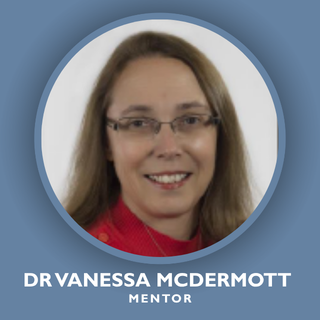
Dr Vanessa McDermott has over 10 years’ experience as a qualitative researcher, with extensive involvement in evaluation across diverse policy areas. Her work spans projects in elite sport, sustainability, workplace safety and major government employment programs.
She has developed evaluation frameworks, including theory of change and program logic, for initiatives such as gender equality in the Australian Defence Force. Vanessa values the role mentoring played in her own development and is keen to support others to build resilience and deliver evaluations that influence and drive change.
Together
As members of the Public Service Research Group in the School of Business at UNSW Canberra, Wendy and Vanessa are contributing to the development of the Group’s evaluation capability. They are keen to support evaluation practitioners while deepening their understanding of the real-world challenges faced by contemporary evaluators.
Wendy and Vanessa bring complementary experience across public and private sector contexts and a strong understanding of the challenges evaluators face in complex organisational environments.
Their mentoring style is facilitative and responsive. They focus on listening first, understanding mentees’ needs, and tailoring support accordingly. Sessions are practical, discussion-based and grounded in real-world experience, with an emphasis on shared learning and application
Mentor Partnership & Style
The group will be mentee-informed, with topics shaped by participants and a focus on practical challenges. The mentors aim to create a supportive environment that encourages open discussion, reflection and peer learning.
Who This Group Is Best Suited For
This group is well suited to evaluators who have technical skills in qualitative and quantitative data collection and analysis for assembling evidence and are looking to build resilience to work adaptively despite challenges, systemic shocks, setbacks or failure. It will be particularly valuable for those working in government or large systems, where competing priorities, political sensitivities and resistance to evaluation are common.
The Capacity Collective
About This Group
The Capacity Collective brings together two experienced evaluation practitioners with a shared passion for evaluation capacity building. While both mentors are strong evaluation methodology ‘all-rounders’, their true focus lies in developing others through coaching, mentoring, and building evaluation capability within teams and organisations.
A key foundation of this group is the ability to ground evaluation design in context, while remaining flexible and responsive to emerging insights and constraints. This reflects the reality of evaluation in practice - dynamic, evolving, and often unpredictable, yet essential for driving program improvement, innovation, and impact.
Group Focus
This mentoring group is designed to build participants’ capability to:
• Conduct rigorous, right-sized evaluations
• Apply evaluation theory in real-world contexts
• Strengthen their ability to build evaluation capability in others
Drawing on adult learning principles, sessions will be practical, reflective and applied, supporting participants to grow both as evaluators and as leaders of evaluation practice.
What You Can Expect to Gain
Through this program, participants will:
• Develop clarity on their strengths and areas for growth across core evaluation competencies
• Build confidence in applying evaluation methods and frameworks
• Create practical action plans to strengthen their evaluation capability
• Deepen their understanding of theoretical and methodological principles
• Learn from real-world challenges, shared experiences, and peer discussion
• Build a network of evaluation colleagues for ongoing support and learning
By the end of the program, participants will be equipped not only to deliver high-quality evaluations, but also to support and grow evaluation capability within their own environments.
How This Mentoring Group Works
The group will take a structured yet flexible approach, including:
•Initial goal setting using Australian Evaluation Society (AES) core competencies
• Ongoing reflection and review of participant goals throughout the program
• Practical, discussion-based sessions grounded in real-world application
Key topic areas will include:
• Understanding the evaluand through program theory and logic models
• Conducting stakeholder analysis and assessing evidence needs
• Exploring evaluation methodologies (e.g. SROI, VFI, Contribution Analysis, Realist Evaluation, Mixed Methods)
• Developing evaluation questions, frameworks, and data matrices
• Qualitative and quantitative data collection and analysis
• Designing rubrics to support synthesis and evaluative judgement
Sessions will emphasise application over theory alone, encouraging participants to bring their own contexts, challenges, and experiences into the discussion.
Samantha Mayes
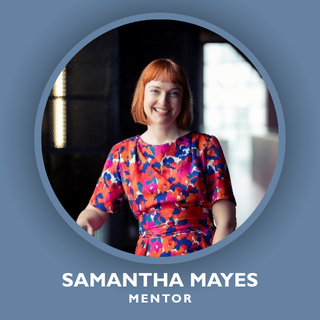
Sam holds a Master of Evaluation from the University of Melbourne and previously led the KPMG Evaluation Community of Practice. She is currently undertaking a PhD focused on moral boundary setting and wellbeing, drawing on ABS and OECD datasets.
With over a decade of experience, Sam has led approximately 24 evaluation projects across government and not-for-profit sectors. She is also an experienced executive coach, bringing a strong focus on capability development and reflective practice.
Dr Renae Domaschenz
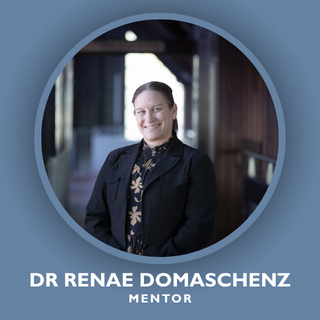
Renae holds a PhD in medical research and has transitioned into consulting following a successful research career at Cambridge University and the Australian National University.
She is a highly regarded leader known for her strong project management capability, effective stakeholder engagement and practical coaching approach.
Renae also brings a unique perspective as a professional rowing coach, reinforcing her strength in performance development.
Together
Together, Sam and Renae are passionate about contributing to the evaluation field in Australia, particularly within public policy and health sectors. They bring a combination of technical expertise, real-world experience, and a commitment to developing others.
Mentor Partnership & Style
As longstanding colleagues, the mentors bring a collaborative and well-aligned partnership. They will balance theory and practice in all discussions, create a space where participants feel comfortable to be authentic, curious, and open, while also being challenged to deepen their thinking.
Their mentoring style is:
• Supportive and developmental
• Practical and applied
• Reflective and discussion-based
Who This Group Is Best Suited For
This group is ideal for:
• Emerging to mid-career evaluators
• Practitioners looking to strengthen their evaluation practice
• Those wanting to build capability in others or lead evaluation work
• Individuals seeking a practical, applied learning environment
Participants will benefit most if they are open to:
• Sharing experiences and challenges
• Actively engaging in discussion
• Reflecting on and applying learning between sessions
Culturally Responsive Evaluation - WALKING IN TWO WORLDS
About this group
This group centres on culturally grounded and responsive evaluation practice. It is designed for evaluators who want to embed cultural context and equity in how evaluations are designed, conducted and used.
At its core, this group explores how evaluation can serve as a tool for learning, continuous improvement and relational accountability, foregrounding care and truth telling. Our shared vision is for evaluation and decision making systems where First Nations people are supported to flourish.
A key theme is the concept of "walking in two worlds" - understanding and navigating the coexistence of First Nations and western sciences.
Group focus
This group will explore what it means to practice culturally grounded and responsive evaluation, and to build others' capacity to do the same in their contexts. Key areas of focus include:
• Partnership grounded in reconciliation, respect, reciprocity and responsibility
• Recognising, respecting and responding to cultural authority
• Positioning evaluation as a tool for relational accountability to past, present and future generations
• Practice that is culturally safe, trauma-responsive and community-led
• Challenging extractive approaches, compliance-driven surveillance, reporting for its own sake and punitive, deficit-based narratives
• Embedding Indigenous Data Sovereignty and governance principles
• Interpreting outcomes through a lens of holistic social and emotional wellbeing
• Navigating complexity when working across organisations and systems.
What you can expect to gain
Through this group, you can expect to:
• Build deeper understanding of culturally responsive and Indigenous-led evaluation approaches
• Strengthen your confidence to apply these principles as an evaluation practitioner and capacity builder
• Learn how to thrive in diverse cultural, ethical and systemic conditions
• Be part of a supportive learning environment grounded in connection and shared purpose
• Develop supportive relationships with peers who are committed to doing this work with integrity.
How this mentoring group works
This group will operate with an intentional structure to reflect the principles it explores.
• Mentoring Model: A four-person mentoring team (see over)
o Two First Nations evaluators (male and female)
o Two non-Indigenous evaluators (male and female)
• Mentee Group Composition:
o Approximately 6 participants
o A balanced mix of First Nations (3) and non-Indigenous (3) mentees
This model is designed to create space for multiple perspectives, encourage shared learning across cultures, and reflect the reality of working in "two worlds".
Fiona Zimmerman
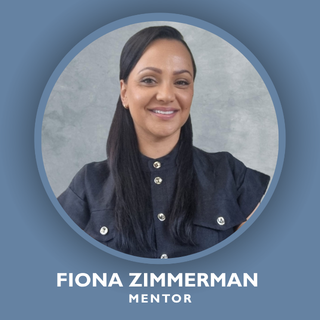
Fiona is a proud Marranunggu woman with a strong commitment to justice, equity, and culturally grounded systems that genuinely serve Aboriginal and Torres Strait Islander communities. She is a Senior Consultant in Indigenous Employment and Retention with ANU's Diversity, Equity and Inclusion team. Her work in Indigenous governance and Indigenous Data Sovereignty reflects a deep accountability to community and Country. Fiona is passionate about supporting practitioners to work ethically, safely, and respectfully across complex systems.
She brings a strong focus on collective approaches to culturally responsive evaluation and data practice, grounded in lived experience and cultural knowledge.
Jessi Gidgup-Lovett
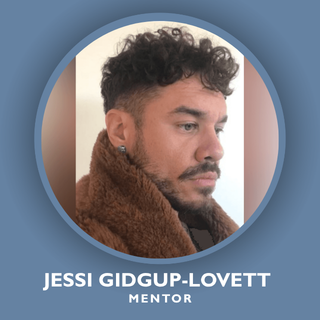
Jessi is a Whadjuk and Gunditjmara man with strong ancestral connections to Yorta Yorta, Boandik and Malgana peoples. He is the Assistant Directer for Evaluation at the Attorney-General's Department.
His work is grounded in community, culture and responsibility to past, present and future generations. Jessi has extensive experience working alongside Aboriginal Community Controlled Organisations and health services, co-designing culturally responsive frameworks across the care continuum. He brings deep expertise in Indigenous Data Sovereignty, governance, and decolonising evaluation practice, with a strong commitment to ensuring First Nations voices are centred in systems that shape their lives.
Lucy Snowball
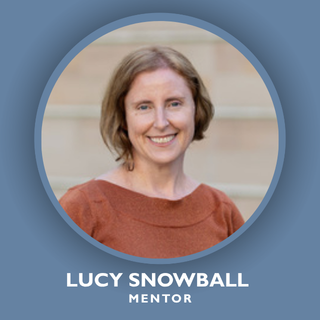
Lucy brings decades of experience in research, evaluation and policy development, with particular expertise in education and working with vulnerable populations. An Associate Director at Rooftop Social, Lucy has previously held senior roles at the Raise Foundation) and in NSW Government, at the Department of Education and in the Bureau of Crime Statistics and Research. Lucy's background combines strong analytical capability with a deep understanding of stakeholder engagement in complex and sensitive environments.
Duncan Rintoul
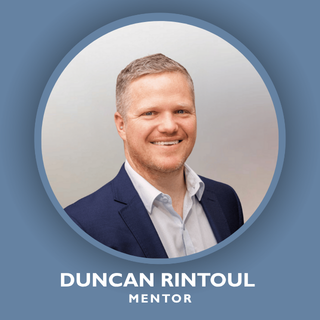
Duncan is an established social researcher, evaluator, facilitator and trainer with over 25 years' experience across diverse policy areas and methodologies. Managing Director of Rooftop Social, Duncan is also an Industry Fellow at UTS, a former Director of the Australian Evaluation Society and an external Director of Mission Australia, where he chairs their Impact Committee. Duncan has a strong focus on building organisational capacity for evidence use. His work history spans education, justice, housing, human services, health, disability, social enterprise and sustainability.
Mentor partnership & style
This group is grounded in partnership, guided by the principles of the 4 R's:
• Reconciliation - Acknowledging history, harm and unfinished business, and committing to doing things differently
• Respect - Honouring cultural authority, consent and the recognition of Indigenous governance
• Reciprocity - Ensuring that evaluation gives back to community in meaningful ways that are defined by community
• Responsibility - Recognising that this work belongs to everyone.
The group will operate in a space of empathy, respect, reciprocity and what the mentors describe as "lateral love". Mentoring will be collaborative, reflective and discussion-based and grounded in real-world application.
Who this group is best suited for?
This group is best suited to evaluators who:
• Are open to learning, unlearning, and reflecting on their own practices
• Are willing to engage in honest, respectful and sometimes challenging conversations
• Value relational approaches and collective learning
• Have a genuine heart for evaluation that is transformational.