Workshop: Principles - the evaluators guiding light (Online 18 November 2026)
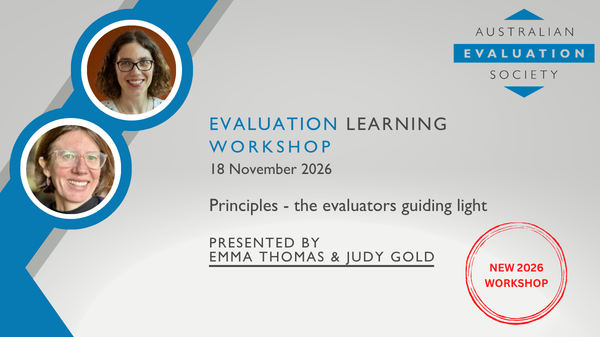
Workshop: Principles - the evaluators guiding light
Date and time: Wednesday 18 November, 2026 10.00am - 1.00pm AEDT (registration from 9.45am). Half day workshop - 1 session
Venue: Via Zoom. Details will be emailed to registrants just prior to the workshop start time
Facilitators: Judy Gold and Emma Thomas
Register online by: 17 November 2026, unless sold out prior. Spaces limited to 25 participants
Fees (GST inclusive): Members $268.00, AES Organisational member staff $395.00, Non-members $440.00, Student member $149.00, Student non-member $205.00* (GST inclusive) * Students must send proof of their full-time student status to
Workshop Overview
Ever wondered what principles have to do with evaluation? Or when and how to use principles? Or what a good principle looks like? Then this workshop is for you!
The purpose of this workshop is to build a comprehensive understanding of why principles matter in evaluation, and when and how to use them. It will strengthen your ability to facilitate the development of principles to guide the design and evaluation of initiatives, including when principles are most useful, what types of evaluands they best suit, and what high quality, actionable principles look like.
Principles are more than just guidelines; they can be a ‘guiding light’ for decision-making. Whether you are evaluating small-scale projects or complex, long-term system change initiatives, principles can help you articulate how an initiative is intended to be implemented, even when the specific activities are not yet known or require adaptation along the way. We’ll also explore how principles can act as a frame for evaluation, assessing to what extent the principle was ‘lived’, and what - if any - difference it made to the final outcomes.
Learning Outcomes
By the end of the workshop, participants will:
-
Strengthen their understanding of how principles for culturally safe evaluation can be applied in their evaluation context.
-
Develop skills in critical self-reflection in working towards culturally safe evaluation.
-
Strengthen their understanding of what it means to be an ally for culturally safe evaluation.
Workshop Content
Drawing on the work of Michael Quinn Patton and other contributors, as well as practice examples, we will explore how principles are applied within different evaluation processes. This includes theory of change development, reflection and learning during program implementation, and end of project/program evaluations, even for projects that are relatively small scale. We will explore the benefits and limitations of principles-focused approaches.
The workshop will also create space for reflective practice. We will consider how principles can guide your own evaluation decisions, judgments, and ways of working, and you will have the opportunity to articulate and examine the principles that already shape your practice.
The workshop will include information sharing, case studies on the use of principles at different stages of the evaluation process, practical exercises to develop and refine action-orientated principles, small group discussions and peer feedback, and individual reflection practice to explore your own practices.
Workshop Objectives
By the end of the workshop, you will:
-
Understand what principles-focused evaluation is, and when it can be applied
-
Recognise what high quality, action-oriented principles look like
-
Explore the benefits and challenges of using principles in evaluations
-
Identify and reflect on the principles that guide your own evaluation practice
-
Understand how to use principles across different stages of evaluation and evaluands
PL competencies
This workshop aligns with competencies in the AES Evaluator’s Professional Learning Competency Framework. The identified domains are:
-
Domain 1: Evaluative attitude and professional practice
-
Domain 2: Evaluation theory
-
Domain 3: Attention to stakeholders, culture and context
Who should attend?
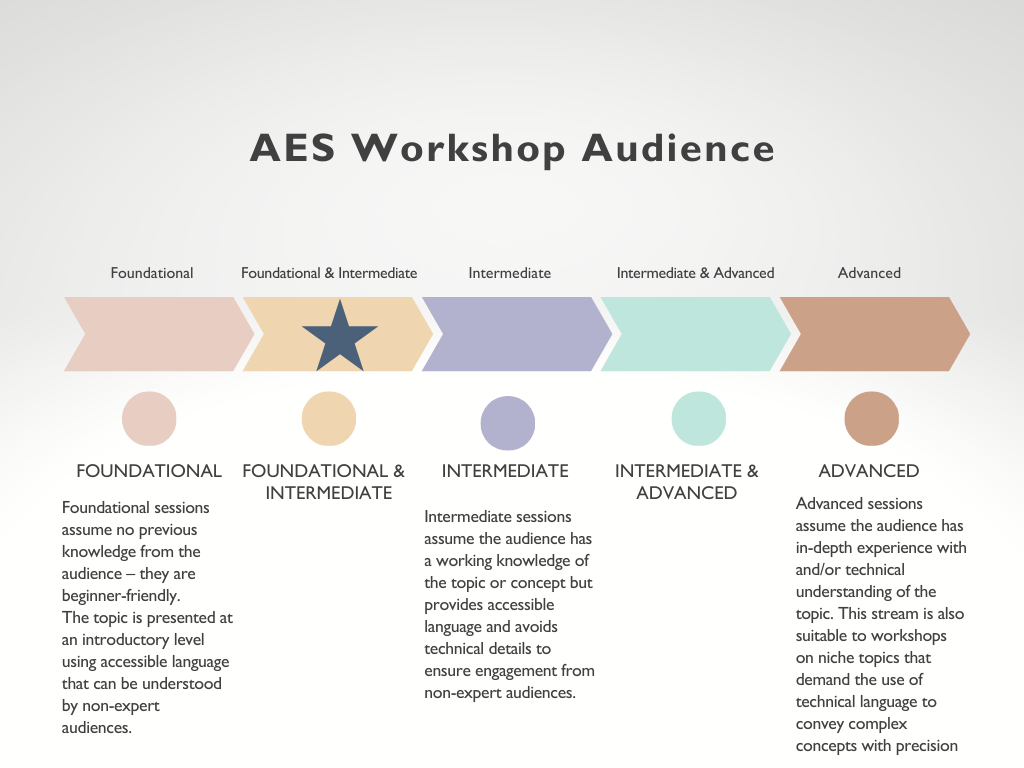
This workshop would benefit those who are responsible for designing or commissioning evaluations and those involved in designing programs (small or large) e.g. program managers, internal evaluation and learning teams, and external consultants. This workshop has been designed to suit those with no prior knowledge or experience using principles in their evaluation work, as well as those with some familiarity and experience.
Notes for online delivery
This workshop will be participatory, and include a mix of activities to make the session fun and engaging. If possible, we ask you keep your camera on whenever possible to support this.
If you have inclusion requirements, please reach out ahead of the workshop. We aim to make the workshop as accessible as possible.
Workshop start times
-
VIC, NSW, ACT, TAS: 10.00am
-
QLD: 9.00am
-
SA: 9.30am
-
NT: 8.00am
-
WA: 7.00am
-
New Zealand: 12.00pm
For other time zones please go to https://www.timeanddate.com/worldclock/converter.html
About the facilitators
Judy and Emma are the co-founders and co-directors of Cultivating Change, a monitoring, evaluation and learning consultancy. We work across the health and social sectors, including evaluations tackling “wicked problems”, particularly in preventing domestic and family violence, where change is non-linear, and progress can be difficult to measure. We love working with evaluation stakeholders to co-design 'practical principles' that are clear, action-oriented, and can guide ways of working in projects from small-scale interventions to long-term system change.
Our extensive experience in training and facilitation, including developing online workshops, ensures you will have a practical and engaging learning experience. We apply adult learning techniques by building in opportunities for applied learning, incorporating real-world case studies, and drawing on the groups’ collective experience for peer learning.
Event Information
| Event Date | 18 Nov 2026 10:00am - 1:00pm |
| Cut Off Date | 17 Nov 2026 4:00pm |
| Location | Zoom |
| Categories | November Workshops |
We acknowledge the Australian Aboriginal and Torres Strait Islander peoples of this nation. We acknowledge the Traditional Custodians of the lands in which we conduct our business. We pay our respects to ancestors and Elders, past and present. We are committed to honouring Australian Aboriginal and Torres Strait Islander peoples’ unique cultural and spiritual relationships to the land, waters and seas and their rich contribution to society.