Workshop: Strong stories, strong outcomes: Narrative practice and strength based evaluation
Date and time: Thursday 26 March, 2026 10.00am - 1.00pm AEDT (registration from 9.45am). Half day workshop - 1 session
Venue: Via Zoom. Details will be emailed to registrants just prior to the workshop start time
Facilitator: Donna-Maree Stephens
Register online by: 25 March 2026, unless sold out prior. Spaces limited to 25 participants
Fees (GST inclusive): Members $248.00, AES Organisational member staff $380.00, Non-members $424.00, Student member $138.00, Student non-member $198.00* (GST inclusive) * Students must send proof of their full-time student status to aes@aes.asn.au
Workshop Overview
This workshop offers a practical approach to incorporating yarning and narrative practice into evaluation settings. The workshop will cover key stages of yarning using narrative practices, through the work of one Aboriginal and Torres Strait Islander evaluator’s perspective. The three-hour workshop is both practical and provides an opportunity to discuss the application of yarning and narrative practice in evaluation.
Workshop Content
The workshop includes a discussion of a yarning framework. Participants will engage in small and whole-group discussions as they apply skills through the practical application of each step of the approach.
Topics covered will include historical and current yarning, narrative and deep listening research and practice through the perspective an Aboriginal and Torres Strait Islander evaluator. There will be required pre-reading for the workshop.
Learning Outcomes
-
Describe yarning and narrative practice processes
-
Apply yarning and narrative practice skills
-
Explore the application of yarning and narrative inquiry in evaluation
Trust is the foundation of working with First Nations communities, where knowledge and information are shared through kinship and clan affiliations based on respectful relationships. Oral histories continue to be a key element of First Nations communities, where ceremony is the place of high-level knowledge sharing, bringing together collective knowledge holders. This sharing is rooted in connections with spirituality and knowledge systems, which are woven through connections to land, water, and the skies, and are linked to kinship and clan. Respecting these ways of working throughout my career as an evaluator and researcher, I have continued to explore the role of yarning and narratives in evaluation and research, where ‘yarning’ often replaces the word ‘interview’ or ‘focus group’, often as extractive processes. Yarning and narrative practice from a First Nations evaluator's perspective are more collective, relational processes and have the potential to leave more positive footprints for all parties involved, including the participants, the community, and the evaluators. That is, yarning and narrative practice in evaluation settings are places for transformation. This workshop prioritises First Nations ways of knowing, doing, and being as part of being authentic and ethical in the broader evaluation settings, and learning from rather than learning about
PL competencies
This workshop aligns with competencies in the AES Evaluator’s Professional Learning Competency Framework. The identified domains are:
-
Domain 1: Evaluative attitude and professional practice
-
Domain 3: Attention to stakeholders, culture and context,
-
Domain 4: Research methods and systematic inquiry
Who should attend?
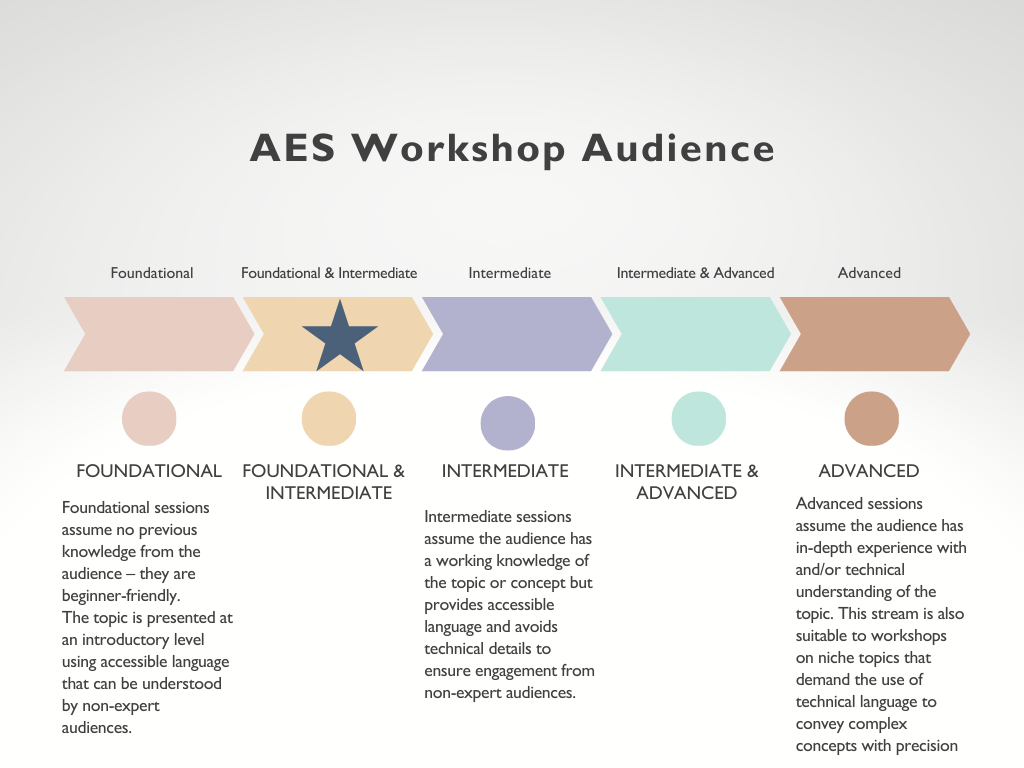
People involved with evaluation in a variety of roles, As an interactive half-day session, this workshop is open to all levels of evaluators but may suit early career and First Nations evaluators best.
Workshop start times
For other time zones please go to https://www.timeanddate.com/worldclock/converter.html
About the facilitator
Donna-Maree Stephens is a Muran/Iwaidja women whose family come from Northwest Arnhemland. She grew up living on Larrakia Country in the Northern Territory. In 1992, Donna began working as a teacher in Belyuen School on the Cox Peninsula. Her early work focused on teacher professional learning, including literacy pedagogy and e-learning in remote settings. In 2010, Donna transitioned to higher education as a lecturer at the CDU School of Education, during which time she focused on supporting First Nations and international students - working in the Growing Our Own First Nations remote preservice teacher program and as the NT Teaching Schools Coordinator. In 2014, Donna transitioned to a research-focused role, focusing on education pathways and remote community development.
Donna has worked in research and evaluation roles focused on AOD, mental health, social and emotional wellbeing and workforce development. In 2019, Donna started work as a consultant and has had the honour of being the inaugural Community First Development Research and Evaluation Fellow. She also contributed to the development of the Better Evaluation Aboriginal and Torres Strait Islander Evaluation Protocol. Donna has over a decade of experience in research and evaluation project management and administration, as well as reporting, publications, and presentations at local, national, and international forums. Her research and evaluation interests include remoteness, poverty, mobility, flourishing, organisational change, ecosystems thinking, generative design and narrative inquiry.

