Workshop: Rubrics made simple: How to build, test and use rubrics
Date and time: Friday 28 August 2026, 10.00am to 1.00pm AEST (registration from 9.45am). Half day workshop - 1 session
Venue: Via Zoom. Details will be emailed to registrants just prior to the workshop start time
Facilitator: Heidi Peterson
Register online by: 27 August 2026, unless sold out prior. Spaces limited to 25 participants
Fees (GST inclusive): Members $248.00, AES Organisational member staff $380.00, Non-members $424.00, Student member $138.00, Student non-member $198.00* (GST inclusive) * Students must send proof of their full-time student status to aes@aes.asn.au
Workshop Overview
Rubrics are a practical and accessible tool for improving evaluation quality, transparency, and shared understanding. Yet many evaluators still feel unsure about how to design and use them effectively in social, cultural, and environmental contexts.
Rubrics are especially useful when outcomes are complex, evolving, or hard to measure. They help evaluators and stakeholders make sense of qualitative and quantitative data and reach clear, shared judgements.
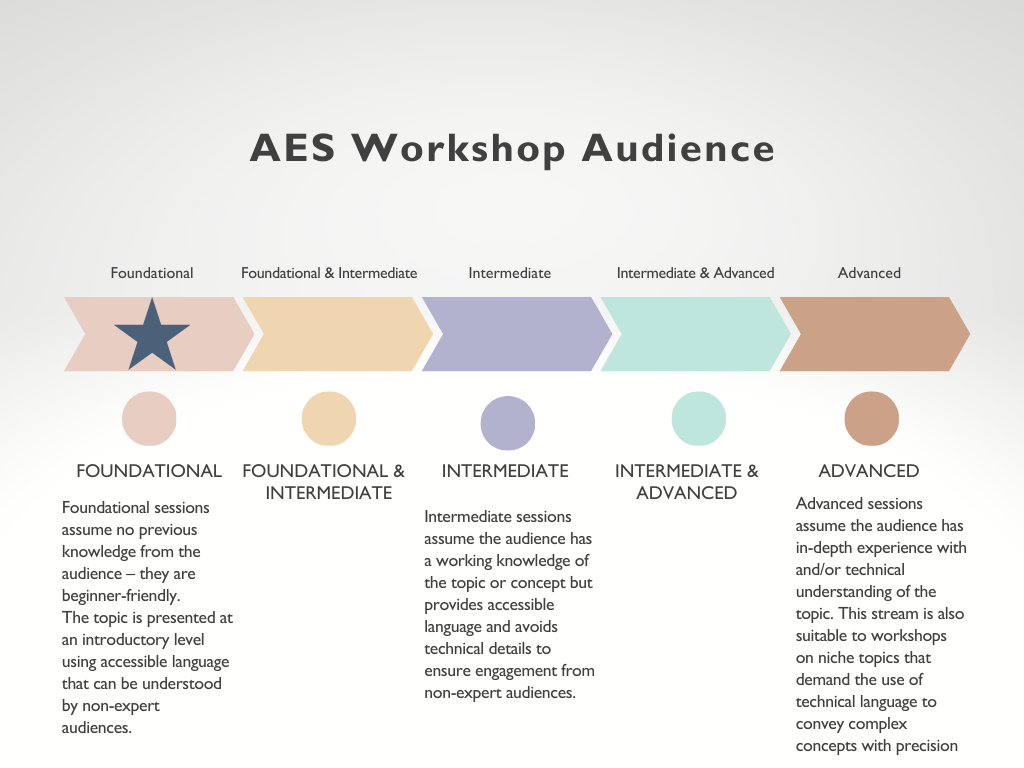
This foundational workshop introduces participants to the core principles, steps, and practical techniques for developing and using rubrics to support evidence-informed evaluative judgement. It is designed for people who are new to rubrics or who want more confidence applying them in real-world evaluation contexts.
Workshop Content
The workshop will guide participants through the purpose and value of rubrics, including how they support evaluative reasoning, make criteria explicit, and enable collaborative sensemaking across stakeholders with diverse knowledge and perspectives. Drawing on examples from social impact programs, the session demonstrates how rubrics help evaluators assess progress, quality, and contribution in situations where outcomes are emergent, long-term, or hard to quantify.
Participants will learn key steps in rubric design, including identifying criteria, developing performance levels, and testing and refining rubrics through participatory processes. The workshop will introduce a suite of rubrics commonly used in evaluation:
-
basic rubrics for assessing program quality and performance
-
progress-mapping rubrics for long-term or systems initiatives
-
rubrics supporting contribution analysis and strength of evidence assessments
Workshop Outcomes
The workshop will deliver a range of relevant learning outcomes. Participants will be able to:
-
Describe when and why rubrics are useful in evaluation.
-
Identify different types of rubrics and their applications.
-
Apply key principles and steps for designing effective rubrics.
-
Use participatory techniques for rubric development, testing, and use.
The workshop is highly interactive and incorporates small-group activities, peer learning, worked examples, and hands-on rubric development. Participants will create a simple rubric during the session using a guided, step-by-step process. By the end of the workshop, participants will understand the types of rubrics relevant for measurement, evaluation and learning, and some key principles and steps for participatory rubric development and use. Participants will develop some basic applied skills in the design steps for building a rubric.
PL competencies
This workshop aligns with competencies in the AES Evaluator’s Professional Learning Competency Framework. The identified domains are:
-
Domain 2 – Evaluation theory
-
Domain 3 – Culture, stakeholders and context
-
Domain 4 – Research methods and systematic inquiry
-
Domain 7 – Evaluation Activities
Who should attend?
The workshop is designed for people who are new to rubrics or who want more confidence applying them in real-world evaluation contexts.
It provides foundational learning and is for early career evaluators; program staff involved in measurement, monitoring, evaluation and learning; project managers; commissioners wanting to understand rubric use.
Workshop start times
-
VIC, NSW, ACT, TAS, QLD: 10.00am
-
SA, NT: 9.30am
-
WA: 8.00am
-
New Zealand: 12.00pm
For other time zones please go to https://www.timeanddate.com/worldclock/converter.html
About the facilitator
Heidi Peterson brings extensive expertise as a Lead Principal Consultant at Clear Horizon and as an experienced evaluator working across social policy, systems change, public health, and organisational learning. She has designed and applied rubrics across numerous evaluations - including value-for-money assessments, systems initiatives, and impact evaluations – and rubrics are an underpinning method for her current doctorate. Heidi has significant experience facilitating engaging workshops using adult learning principles, including interactive group work, practical tools, peer learning, and real-world examples. Heidi receives consistently positive participant feedback, highlighting her clarity, practical orientation, and ability to make complex concepts accessible.

